
Discussion
Commoditising "Design"
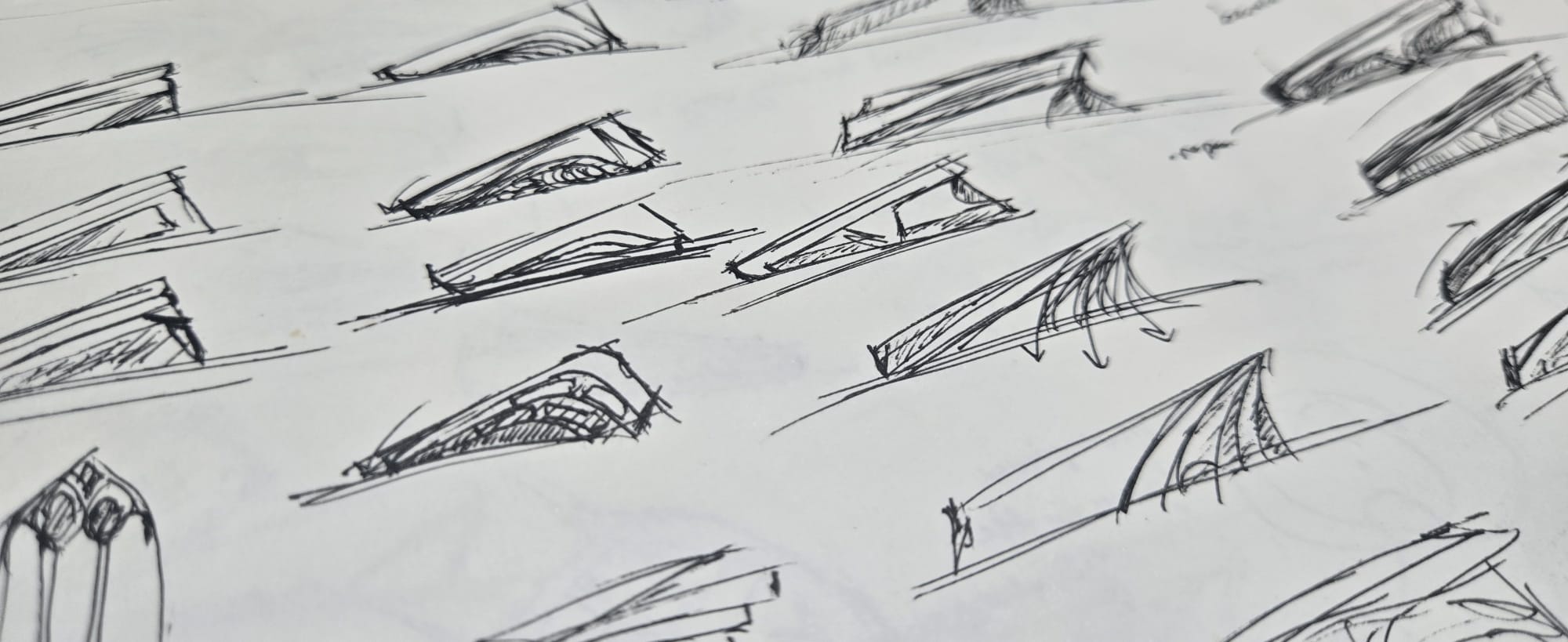
I have been approached over the years for commissions for keyboard projects to bring their wishlists into real life.
More often than not, these clients arrived with a rigid blueprint. They would extract their favorite aesthetic beats and structural tricks from iconic community projects, asking to compile them all into a single, personalized chassis. After all, if you love three distinct design languages, why not combine them?
After all, the only thing really better than having your cake, is having two… or three or even more.
To be frank, a younger version of myself took those jobs.
With the belief that these features are not "owned" by anyone, and that if anything I was paying homage to the ones that came up with these ideas first.
Who was I to deny someone a custom board that bypassed aftermarket markups or exclusive raffles? Besides, it was good money.
Today, I look back at these in a healthy dose of shame.
I look back on these projects and see them as half-baked interpretations of meanings and decisions that were made way before me and far above what I could then see.
Fundamentally, a keyboard is just a block of milled metal. A side profile reveal or an intricate weight recess is, on a mechanical level, simply a CNC spindle following a path through aluminum.
But the path itself isn't what matters. The decisions driving that path stem from years of iteration, material experimentation, and subtle proportion adjustments that just aren't visible to someone copying the end result.
When you isolate a feature from the philosophy that produced it, you reduce intentional design to just feature-stacking.
The perspective from its author that made it valuable in the first place is stripped away, leaving behind a shell that looks like the original, but carries none of the soul it originally came with.
Intention is what drives the line between inspiration and reproduction.
This line can be awfully blurry at times, and I am no authority to dictate where it strictly lies.
But I believe inspiration respects the original designer's process.
It asks why a choice was made, not just what was drawn.
When you copy a specific top edge chamfer style, or a bezel sizing, you're strip-mining a design to mimic its convictions in the name of making a "homage". A edge break radius could be determined by so many things: visual hierachy, cultural influences, a seam it wanted to hide, and so many more.
Dragging this onto something foreign as a "homage" destroys its logic, removing the reason for its being.
Only in the time to understand the underlying tension, balance, and material logic behind a great design, you don't need to copy its physical shape.
You carry the philosophy forward, set your own constraints, and create something that can actually earn its place on the desk.