
Design
The Front Lip
Why Optica's front lip is a curve.
Most keyboards end at the front edge the same way. A hard 45 degree chamfer that goes deeper into the front, what the community usually calls a cherry lip, or some variation on it where it tapers in and out.
The angle changes once, sharply, and that's the front of the board. It's a resolved solution. It works, it reads clearly, and nearly everyone uses it.
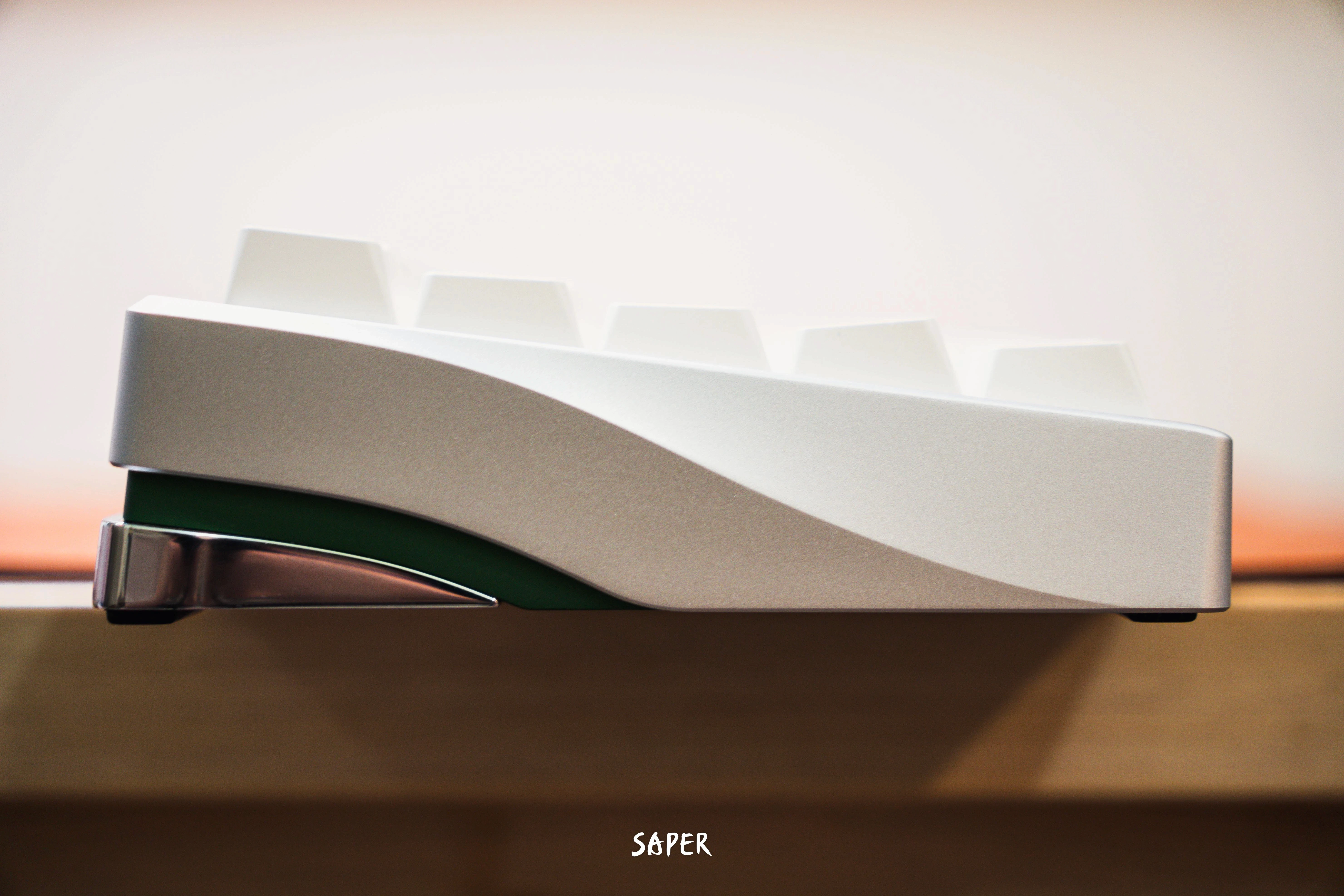
Optica doesn't.
The front lip is a subtle continuous curve, barely noticeable from its side.
That decision has a specific reason, and this is it.
What Optica was about
The design argument behind Optica was the relationship between form and attention.
The claim was that organic curves, resolved with enough precision, reward the act of looking, that an object could behave differently depending on where you stood relative to it.
Light catches differently. The profile changes. A line from one angle becomes something more complex from another.
The intention was that looking at Optica wouldn't be incidental. That the object would return something to whoever was paying attention to it.
That premise had a direct implication for every surface decision on the board. A surface that changes predictably, that has a fixed profile regardless of viewing angle, doesn't participate in that argument.
Present, but not active.
The front edge, being the surface most directly in a seated user's sightline, was one where a lot of consideration was spent.
Why?
A hard bevel resolves the front edge with a single angle change. It's legible and clean, and that legibility is part of its appeal: You read the edge immediately and completely.
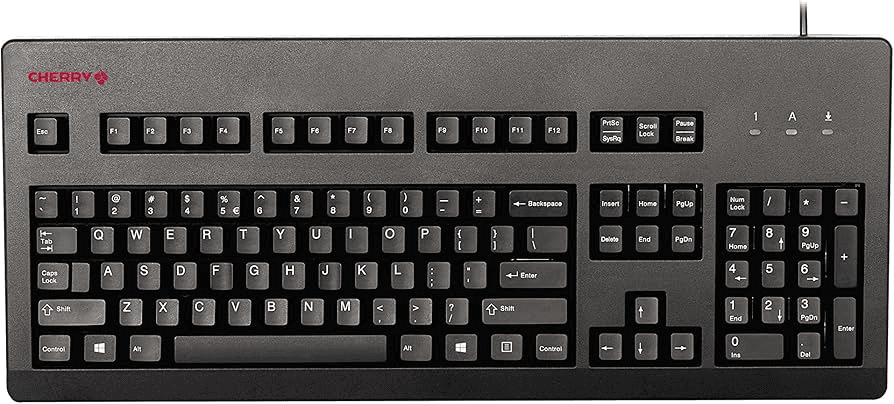
Cherry G80-3000 Keyboard
But that completeness is also the problem.
A hard bevel looks the same from every angle within a normal range of view. There's no gradient, no transition, nothing that changes as you move.
It doesn't reward attention because it doesn't change in response to it.
Tapering the front edge variably didn't solve this either.
The profile is still a fixed shape. The lines change but the behaviour doesn't. You're still looking at the same form regardless of where you sit relative to it.
Neither was truly the answer to the question that was looking to be answered.
The Result
A gentle continuous curve was applied to the front face using a 5-axis operation.
Not just an line with a radius applied to its edge, a surface that is itself curved, so that what the eye receives changes as the viewer moves.
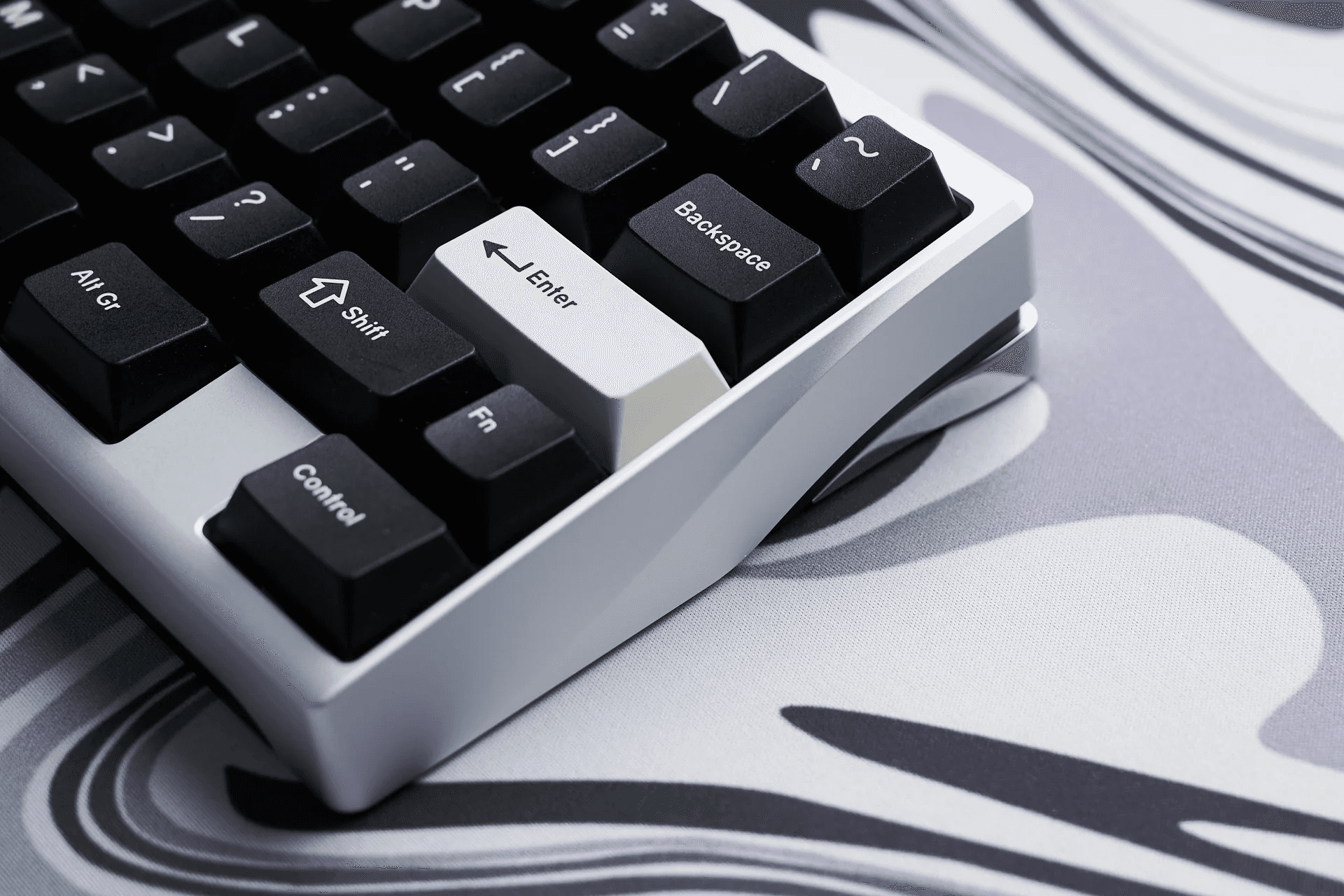
When you sit back, the front face presents a gentle gradient.
As you lean forward, the gradient shifts, changing as your perspective does.
The curve was then resolved at its edge with an additional fillet.
That edge catches light differently from the face, a sharper gradient that defines where the board ends without using a hard angle to do it.
The edge is present, but doesn't contradict what the lip is saying.
In person, this feature turned out beautifully, where the edge break added an additional layer of complexity as light bent around it that carried itself not only just along the lip, but the entire board.
The 5-axis operation costs more than a standard bevel due to its insanely large radius, meaning that the operation could only be carried out by an atypical endmill, but that cost was straightforward to justify: the front lip was the surface most directly implicated in the design argument.
Cutting cost there would have been cutting the argument.