
Design
An Object That Talks Back
Most things you own that were designed with intention: a watch, a chair, a lamp, ask one thing of you: that you notice them.
That you look, that you appreciate.
The relationship ends there.
A keyboard doesn't work that way.
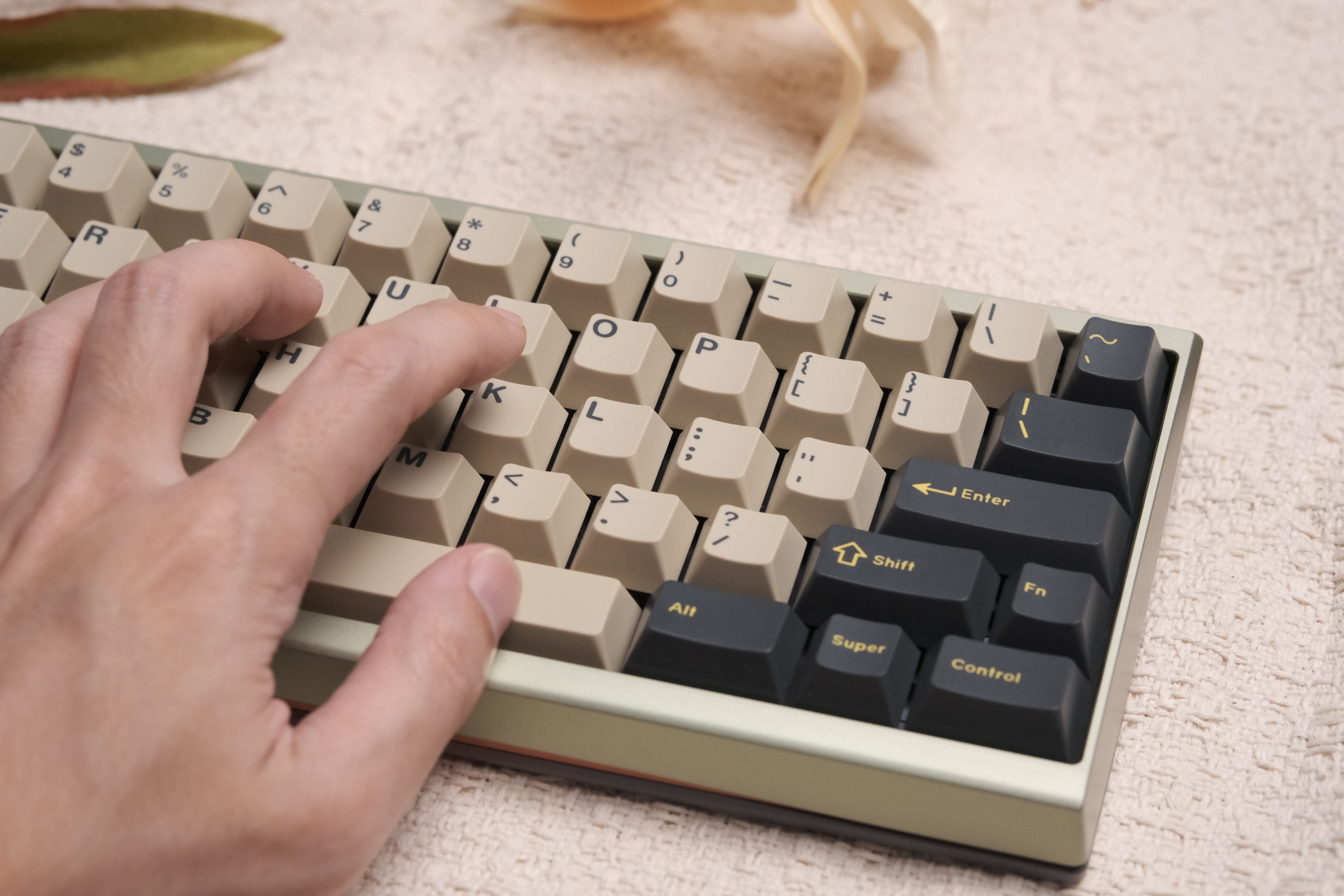
You use it for hours. Every day.
It is in constant dialogue with you, through the resistance of each keypress, the sound the case makes when your hands are moving fast, the way your workspace encourages you;
It doesn't wait to be appreciated. It performs, whether you're paying attention or not.
That changes what intentional design actually means.
On a static object, an arbitrary decision is an aesthetic failure.
You might notice it, you might not.
On a functional object, an arbitrary decision becomes something you live with.
A curve that exists for no reason feels wrong under the wrist for as long as you own it.
A sound profile that wasn't considered announces itself every session.
A tolerance that wasn't deliberate is a small wrongness, repeated tens of thousand of times in its function.
This is why every decision being answerable isn't just a design principle for me.
It's the standard the object enforces on its own.
You may not immediately know why a bezel sits at a specific distance, or why the gasket was tuned the way it was, or why the emblem was reduced to an accent rather than a statement.
But you will feel the difference between a design where those questions were answered and one where they weren't. The object makes sure of that.
It talks back. Every time.
That's what makes the standard worth holding, and using it mean something.